The frustration of a sports injury is rarely the pain itself. It’s the uncertainty, not knowing how serious it is, how long it will take, whether you’re doing the right things. After years managing injuries from grassroots sport to professional rugby league, the consistent finding is this: most athletes who recover slowly do so not because their injury was severe, but because of how it was managed in the early weeks.
Get assessed before the acute phase passes
The window immediately after a sports injury is when clinical assessment is most informative. Swelling patterns, tenderness localisation, movement testing and ligament stress tests all tell a clearer story in the first few days than they do two or three weeks later, when everything has settled into a generalised ache and the picture becomes muddier.
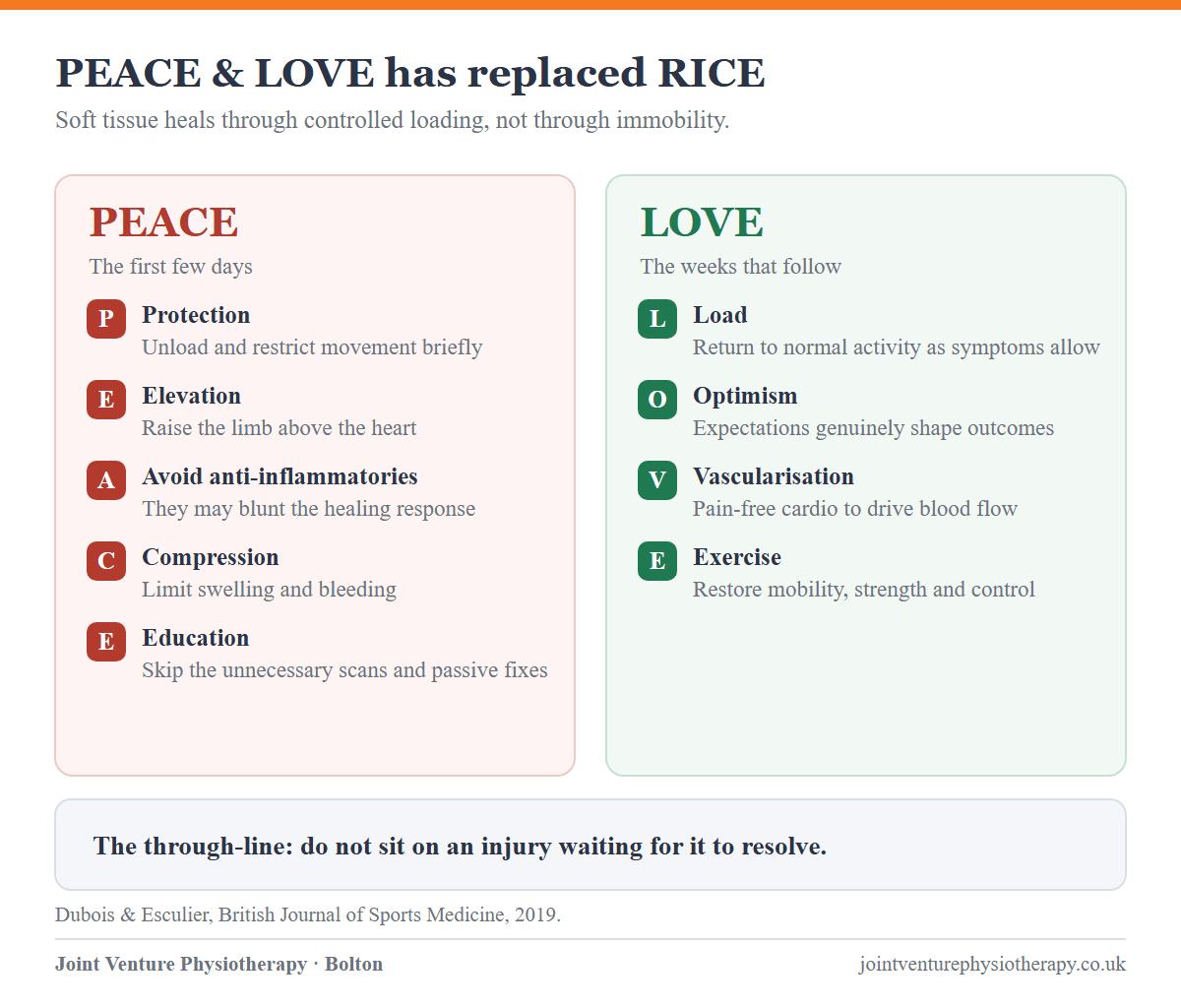
Early assessment also means early treatment. For muscle injuries, the research is clear that appropriate loading in the first 48–72 hours produces better healing outcomes than complete rest. The old RICE protocol. Rest, Ice, Compression, Elevation, has largely been replaced by PEACE & LOVE in modern sports physiotherapy, and the core message is the same: don’t sit on an injury hoping it resolves. Know what you’re dealing with, and start the right management immediately.
Movement is the treatment, not the risk
Complete rest is almost never the correct approach for soft tissue injuries. Tendons, muscles and ligaments heal through controlled loading, not through immobility. The biological process of tissue repair requires mechanical stimulus, without it, healing is slower, scar tissue is less organised, and the repaired tissue is weaker than it needs to be.
What appropriate loading looks like is specific to the injury, its severity and the stage of healing, which is why working with a physiotherapist who can prescribe the right programme at the right time matters. The principle, however, is reliable: movement is the medicine. The goal is not rest, but the right kind of activity.
What happens between sessions matters more than the sessions themselves
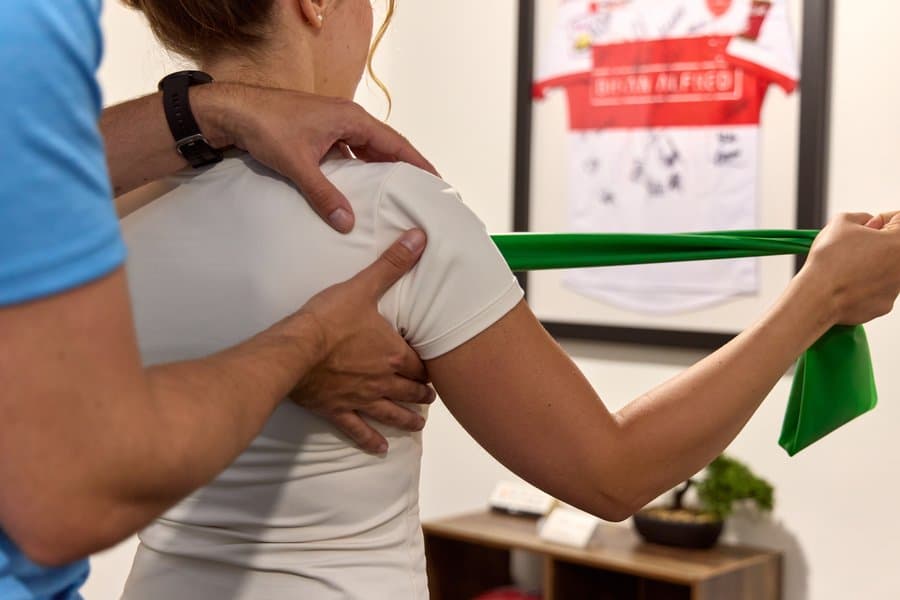
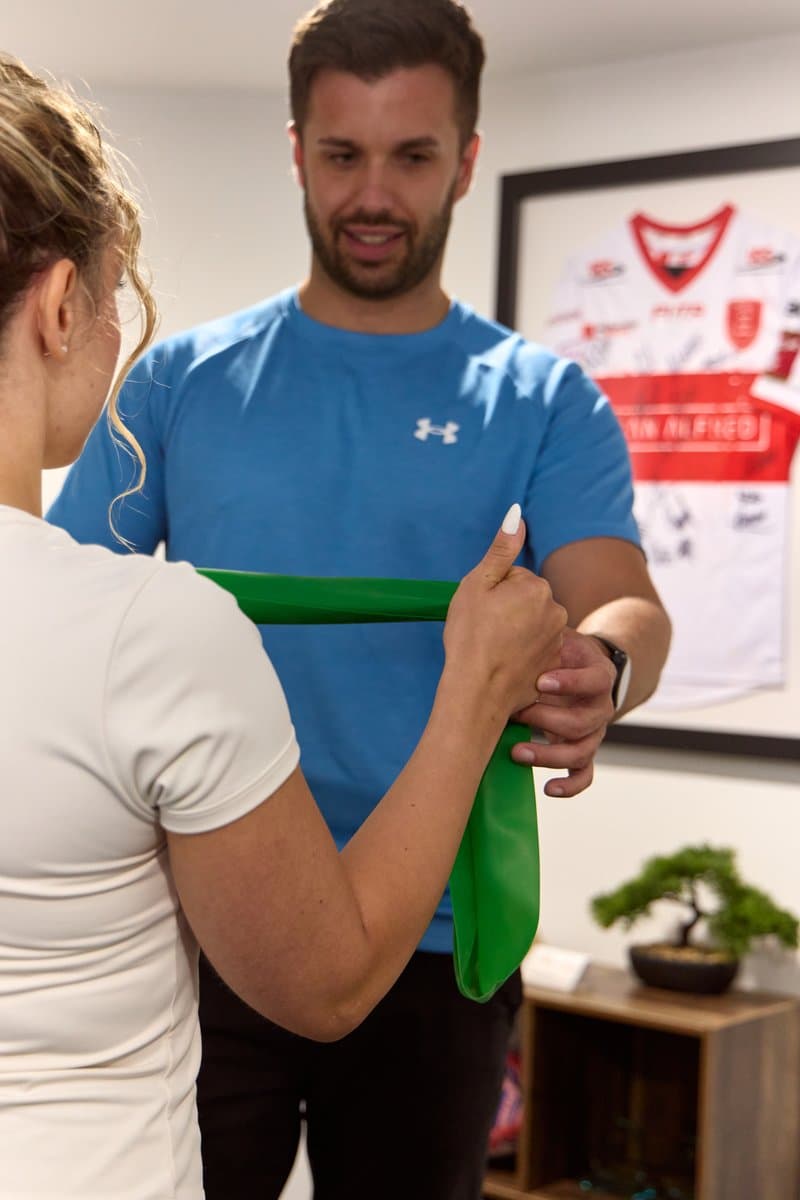
A 30-minute physiotherapy appointment once a week is a small fraction of your week. What you do between sessions, the home exercise programme, the load management, the sleep, has far more influence on your recovery trajectory than anything that happens in the clinic.
Athletes who complete their rehabilitation programmes consistently recover faster. This is not a marginal difference, it is significant. If your programme isn’t working for you because it’s too long, too unclear, or too painful to complete, raise it with your physiotherapist. A programme you do properly, every day, beats a theoretically superior programme you skip half of.
Sleep is an underused recovery tool
Growth hormone, the primary driver of muscle and connective tissue repair, is predominantly released during deep sleep. Athletes who prioritise 8–9 hours during recovery periods heal faster, return to sport sooner, and re-injure less frequently than those sleeping 6–7 hours.
If you are serious about the speed of your recovery, sleep should be treated as a performance variable, not a lifestyle afterthought. Consistent sleep and wake times, a dark room, and avoiding screens in the 30 minutes before bed are the foundations. They are also free.
Return to sport requires criteria, not just time
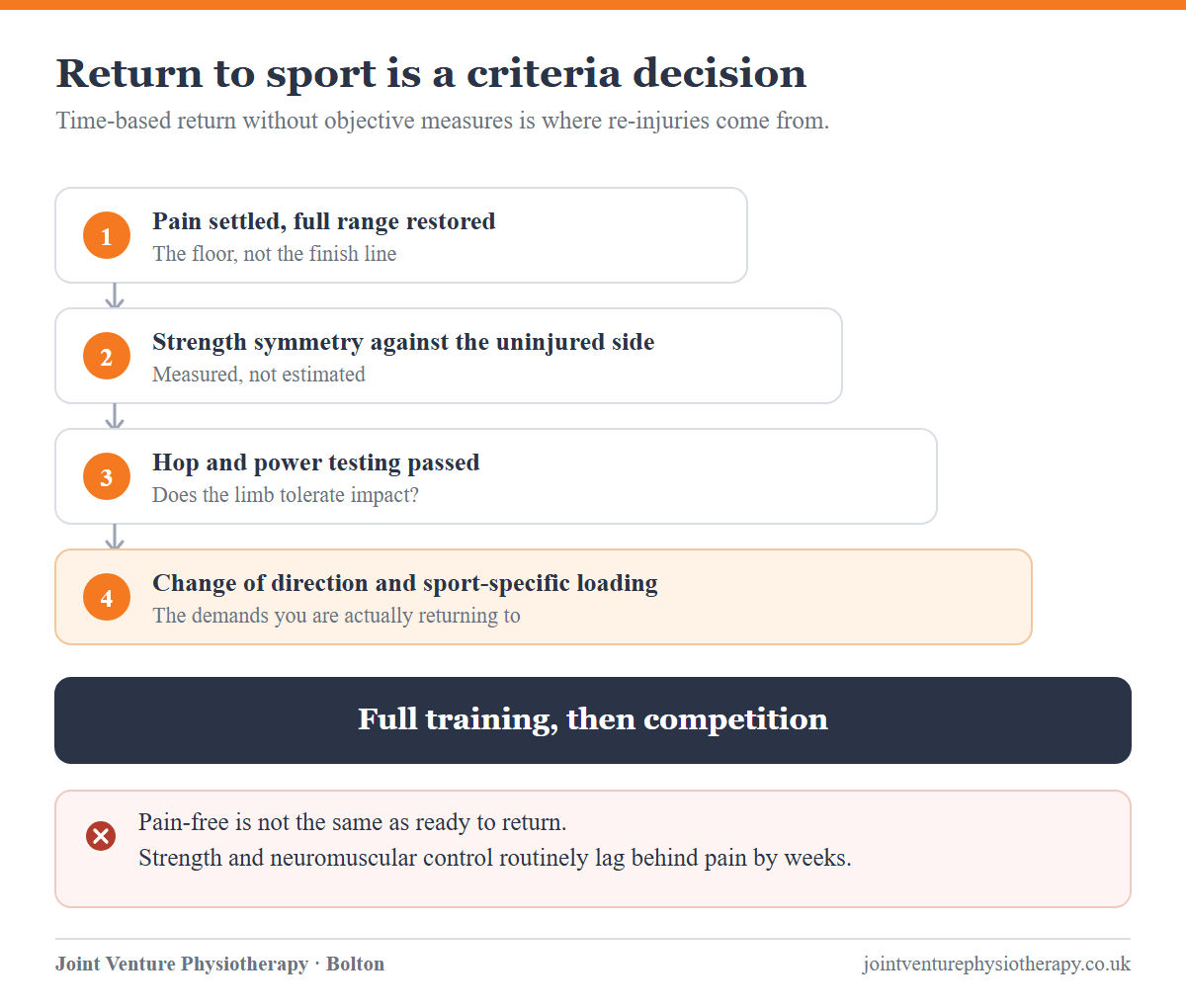
The most common cause of re-injury is returning to sport before the original injury has fully resolved. Pain-free is not the same as ready to return. Strength deficits, neuromuscular control, and sport-specific movement patterns all need to be objectively assessed before full return, and they frequently lag behind the resolution of pain by weeks.
A well-designed return-to-sport programme includes objective criteria at each stage: strength symmetry tests, hop tests, change-of-direction assessments, and sport-specific loading progressions. Time-based return without accompanying objective measures is not adequate, and the re-injury statistics reflect this. Push for criteria. Know what being ready actually means for your injury.
The passive treatment trap
Manual therapy, soft tissue massage and acupuncture all have evidence-based roles in sports injury rehabilitation, but as adjuncts to active rehabilitation, not substitutes for it. A patient attending weekly physiotherapy sessions and receiving hands-on treatment, but completing no exercises at home, is using the passive component of a programme that only works when both components are in place.
The honest picture of recovery is this: the clinician’s job is to assess accurately, prescribe correctly, progress intelligently, and address the manual therapy components that require clinical input. The athlete’s job is everything in between. Both matter. The athlete’s portion is larger.
Sports injury assessment in Bolton
Same-week appointments are usually available at Joint Venture Physiotherapy. No GP referral is needed. Call 07586 605462 or book online.