Sports Rehabilitation

Sports Injury & Rehabilitation in Bolton

From acute sports injuries to long-term performance rehab. Marcus brings elite sport physiotherapy experience to every athlete. Assessment, treatment, and a structured return-to-sport programme built around your timeline.

Evening appointments Monday to Friday from 4.30pm, plus Saturday 9.30am2pm.

From £46 · Elite sport experience · Same-week appointments

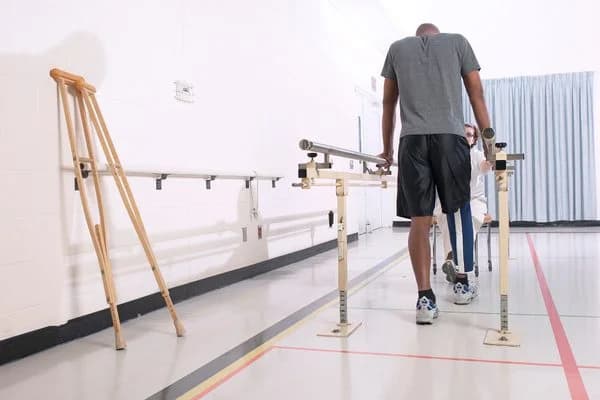
Marcus guiding a patient through sports rehabilitation at Joint Venture Physiotherapy

Elite Background

Across several sports teams

Full Journey

Injury to return-to-sport

Outdoor Rehab

Sport-specific environments

Same-Week

Appointments usually available

Why Joint Venture

Elite Sport Experience, Every Patient

Elite Sport Background

Marcus has worked across several professional rugby and football clubs, managing return-to-play and performance physio at professional level. That experience informs every sports rehab programme.

End-to-End Management

From the initial injury assessment through hands-on treatment, structured exercise rehab and return-to-sport testing. Marcus manages the full journey, not just the early stages.

Outdoor Rehab Available

For athletes in the final stage of recovery, outdoor rehabilitation sessions in sport-specific environments are available. Real-world rehab for real-world performance.

Injuries Treated

Sports Injuries We Treat

Marcus manages the full spectrum of sports injuries, from acute trauma to overuse and chronic conditions. His elite sport background means complex, high-demand cases are his clinical home ground.

ACL & Knee Ligament Injuries
Muscle Tears & Strains
Hamstring Injuries
Rotator Cuff Injuries
Ankle Ligament Sprains
Achilles Tendinopathy
Patellofemoral Pain
Shin Splints
IT Band Syndrome
Shoulder Dislocations
Groin Strains
Return to Sport After Surgery
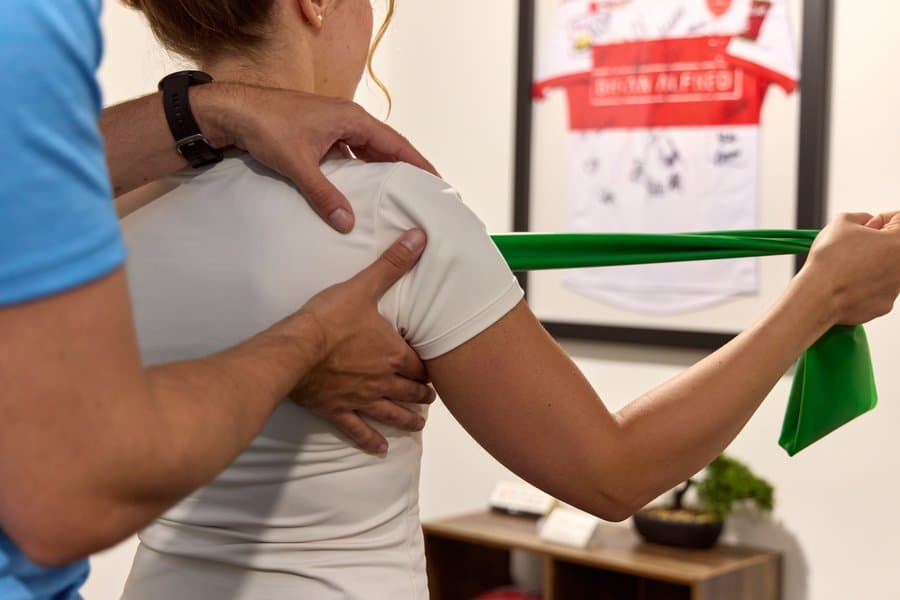
Marcus guiding a patient through shoulder rehabilitation exercises

The sports we see most

Marcus previously worked as physiotherapist for clubs including Hull Kingston Rovers, Wigan Athletic and Manchester City. That matters less as a credential than as a working knowledge of what each sport actually does to a body, and what a genuine return to it requires.

Rugby league

A collision sport, and the injury pattern reflects it: shoulders and acromioclavicular joints from tackling and landing, knees from contact and from cutting, and hamstrings from repeated sprint efforts. Forwards and backs do not present the same way, and a programme that ignores the difference will return a prop to contact underprepared.

Amateur and semi-professional players are the ones most often let down here — not by poor treatment, but by rehabilitation that stops at “pain-free” rather than continuing to contact-ready. Those are separated by several weeks of work.

Football

Hamstring strains are consistently the most commonly recorded injury in professional football, and the pattern holds in the amateur game. Groin and adductor problems, ankle sprains and knee ligament injuries make up most of the rest.

Two things determine whether a hamstring comes back or recurs: whether eccentric strength was genuinely rebuilt rather than assumed, and whether sprint exposure was reintroduced gradually instead of in one Sunday morning. Re-injury rates are high in this group precisely because the second one gets skipped.

Running

The largest group of amateur athletes in Bolton, and the one whose injuries are most often a training-load problem wearing a structural disguise. Achilles tendinopathy, patellofemoral pain, medial tibial stress syndrome and plantar heel pain dominate, and behind most of them sits a change in volume, intensity, surface or footwear in the preceding weeks.

Which is why the assessment asks what your training looked like a month ago, not just where it hurts now. Bolton runners get a particular version of this — the climbs at Rivington and Winter Hill load calves and Achilles very differently from flat road miles, and switching between them abruptly is a common trigger.

Gym and strength training

Shoulders from overhead pressing, lower backs from deadlifting and squatting, elbows and wrists from volume. Usually technique or progression rather than anything structurally wrong, and usually fixable without stopping training altogether — which is what most people are actually worried about when they book.


What “fit to play” should actually mean

Being pain-free is not the same as being ready. It is the point at which most amateur rehabilitation stops, and it is why so many injuries recur within weeks of a return.

A return-to-play decision should rest on criteria you can measure, not on a date in the calendar or on how the joint feels walking around:

  • Strength restored against the other side, tested rather than eyeballed.
  • Full, controlled range of movement under load, not just passively.
  • The specific demands of your sport, rehearsed — sprinting, cutting, jumping, landing, contact. Whichever ones you will actually meet.
  • Full training completed before selection, not selection followed by a first session back.

You will be told plainly where you are against those, including when the honest answer is that you are not ready and the fixture is too soon. That is the part that protects the rest of your season.

Head injuries: if in doubt, sit them out

Suspected concussion is not a physiotherapy appointment. Anyone with a head impact and symptoms — headache, dizziness, confusion, memory problems, nausea, balance trouble, feeling “off” — should be removed from play immediately and assessed medically. Go to A&E for loss of consciousness, repeated vomiting, worsening headache, seizure, weakness or slurred speech.

The UK Concussion Guidelines for Grassroots Sport, published in 2023 by the Government and the Sport and Recreation Alliance, are clear that nobody should return to sport within 24 hours of a suspected concussion, and that a graduated return is then managed under your sport's own protocol.

Physiotherapy has a role afterwards — neck problems and balance symptoms frequently accompany a head injury and respond well to treatment. It has no role in place of that initial medical assessment.

Transparent Pricing

Sports Rehab Fees

How much does sports rehabilitation cost in Bolton?

An initial assessment is £52 for 40 minutes and treatment sessions are £46 for 30 minutes. Outdoor sports rehab is £55 for 45 minutes, and home visits are £80.

AppointmentDurationFee
Initial Assessment40 mins£52
Rehabilitation Session30 mins£46
Virtual Session30 mins£40
Outdoor Sports Rehab45 mins£55
Home Visit60 mins£80

Insurance accepted: Bupa, AXA Health, Aviva, Vitality, WPA.

Private healthcare referrals accepted

BupaAXA HealthAvivaVitalityWPA

How to claim physiotherapy on your insurance →

Common Questions

Sports Rehab FAQs

Questions about your injury or recovery timeline? Call 07586 605462 or message on WhatsApp.

Same-week appointments are usually available. Early assessment matters, the window immediately after injury is when clinical findings are clearest, and when starting the right management has the most impact on recovery speed. If you've recently been injured, don't wait for it to 'settle down' before booking.

Your Recovery Is Our Joint Venture.

Stop suffering with Pain. Start improving It.

Evening and Saturday appointments available. In-clinic, remote, or home visits. No GP referral, no waiting list, no ambiguity about what happens next.

Prefer to talk it through? Susie answers 24/7 and can book you straight in · 07586 605462