When people arrive at the clinic with knee pain, they have usually already made a diagnosis. They have googled their symptoms, concluded something is torn or worn down, and arrived half-expecting to be told they need an MRI and eventually a surgeon. Most of the time, that story is wrong. Not because the pain is not real, but because the knee is more resilient than most people believe, and the evidence for what actually helps it recover is more straightforward than the internet suggests.
This guide explains the most common causes of knee pain, what a proper assessment involves, and what the research says about treatment. It is written from clinical practice, not a textbook.
The knee: a quick note on why it fails
The knee is the largest joint in the body and one of the most mechanically complex. It does not just hinge. It rotates, it locks out for standing, it absorbs load. During walking, the forces passing through the knee joint are roughly three times your bodyweight. During running, that rises to six or seven times. The knee handles this brilliantly, most of the time, because it is supported by a system of muscles, tendons and ligaments that distribute load intelligently across the joint.
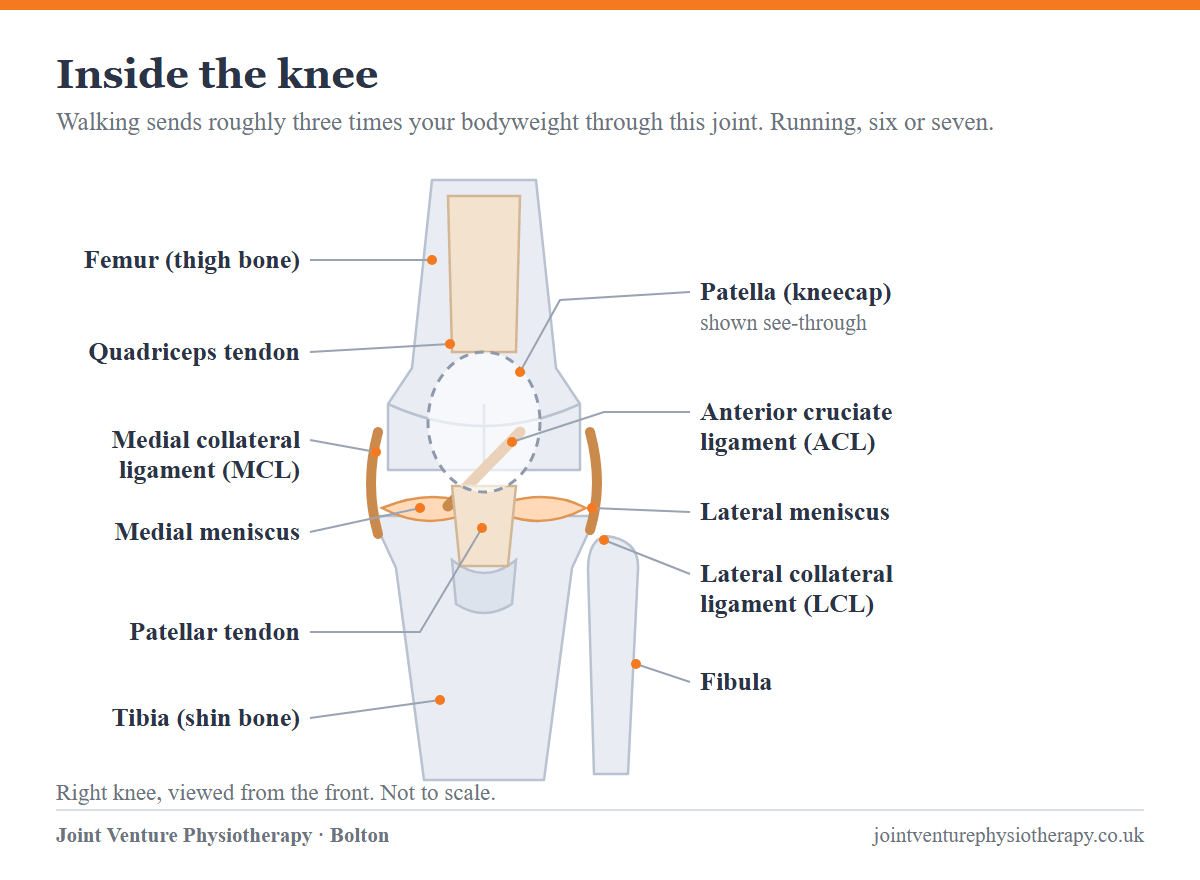
When that system breaks down, whether through injury, weakness, training error or age-related change, the knee starts to absorb load in ways it was not designed for. Pain is usually the first signal that something in that system needs attention. It is rarely a signal that something is permanently broken.
Patellofemoral pain: the most common knee complaint most people have never heard of
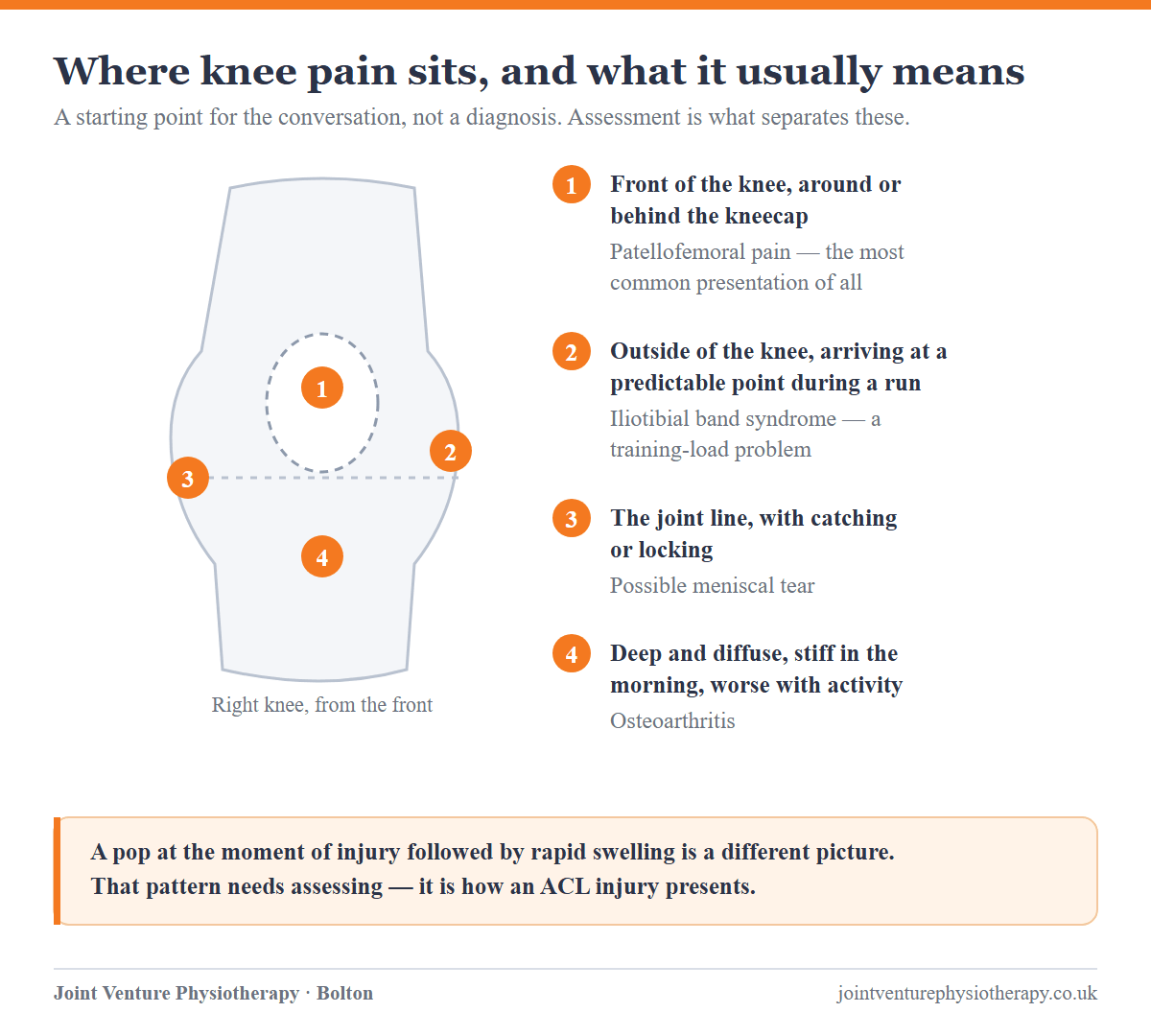
Pain at the front of the knee, around or behind the kneecap, is the single most common knee presentation in physiotherapy. It goes by several names: runner's knee, anterior knee pain, patellofemoral pain syndrome. Whatever you call it, the mechanism is the same. The kneecap is not tracking cleanly in its groove as the knee bends and straightens, and the tissues around it are being irritated as a result.
The cause is almost never the kneecap itself. It is typically a combination of weak hip muscles, altered foot mechanics and a sudden increase in training load. The kneecap is caught in the middle of a load it was not prepared for.
This is one of the most treatable conditions in musculoskeletal physiotherapy. Load management in the short term, progressive hip and quad strengthening, and movement retraining produces reliable results. The mistake most people make is resting completely, which removes the pain temporarily but does nothing to address the underlying weakness. The pain returns the moment they start training again.
Knee osteoarthritis: what the NHS guideline actually says
Osteoarthritis is the most common joint condition in the UK, and the knee is its most common site. Around one in five adults over 45 are affected to some degree. The typical story is years of gradual onset, increasing stiffness in the morning, pain that worsens with activity and eases with rest, and a persistent grinding or creaking when the joint moves.
The misconception, and it is widespread, is that deteriorating cartilage is a one-way street ending in surgery. The evidence does not support that view. The NICE clinical guideline on osteoarthritis (NG226, updated 2022) is clear on what works: therapeutic exercise is the core treatment, above medication, above injections, above any device or supplement. The same guideline explicitly recommends against arthroscopic keyhole procedures for knee OA, because the evidence shows they are no more effective than placebo surgery.
Exercise is uncomfortable when you start. Pain may increase initially, and many people interpret that as damage. It is not. NICE guidance specifically addresses this, advising that patients should continue with regular exercise even when it initially causes discomfort, because the long-term benefits for pain, function and joint health are well established. Physiotherapy-led rehabilitation, structured and progressive, is what changes the trajectory of knee OA.
Meniscal tears: the research has shifted significantly
The menisci are two C-shaped pads of cartilage sitting inside the knee joint. They act as shock absorbers and help stabilise the joint under load. Tears can happen acutely, typically from a twisting injury during sport, or gradually, as degenerative changes develop in older adults.
For decades, the standard response to a meniscal tear was arthroscopic surgery to trim or remove the damaged tissue. That approach has been substantially revised. A series of high-quality clinical trials, including the landmark Finnish FIDELITY trial, found that for many patients, supervised exercise rehabilitation produces outcomes equivalent to surgery. For degenerative tears in particular, most clinical guidelines now recommend physiotherapy as the first-line treatment, with surgery reserved for cases that do not respond.
This does not mean every meniscal tear is managed without surgery. Acute tears in younger, active patients, particularly those causing mechanical symptoms like locking, may well require operative management. But the default assumption that a torn meniscus needs to be operated on is no longer clinically justified.
ACL injuries: surgery is not automatic
An anterior cruciate ligament tear is one of the most feared sports injuries. The mechanism is typically a non-contact pivoting or landing movement, the kind common in football, rugby, basketball and skiing. A pop at the moment of injury, rapid swelling within hours, and significant instability are the hallmarks. It is a serious injury, and it is not minimised here.
What has changed in the last decade is the consensus around management. ACL reconstruction is not automatically the right path. For patients who are not returning to pivoting sport, who have good neuromuscular control of the knee, and who are committed to a structured rehabilitation programme, non-operative management can achieve excellent outcomes. The decision depends on the patient's age, activity level, knee stability and goals, and should be made collaboratively with a clinician who knows the evidence.
What does not change in either pathway is the role of physiotherapy. Whether you have surgery or not, the rehabilitation programme that follows is what determines how well your knee functions in the years ahead.
IT band syndrome: a training problem, not a structural one
IT band syndrome produces a sharp, burning pain on the outside of the knee that typically starts at a predictable point during a run, often around the 20 to 30 minute mark, and forces a stop. It is caused by compression of the fat pad beneath the iliotibial band as it crosses the lateral knee, not by friction, as was historically taught.
The underlying driver is almost always a training load error combined with hip abductor weakness. The band itself is not the problem and cannot be stretched or rolled away, despite what most online advice suggests. Treatment focuses on modifying running load, strengthening the hip, and addressing any contributing factors in gait or foot mechanics. It responds well, but it requires patience and a willingness to reduce mileage temporarily.
What assessment involves
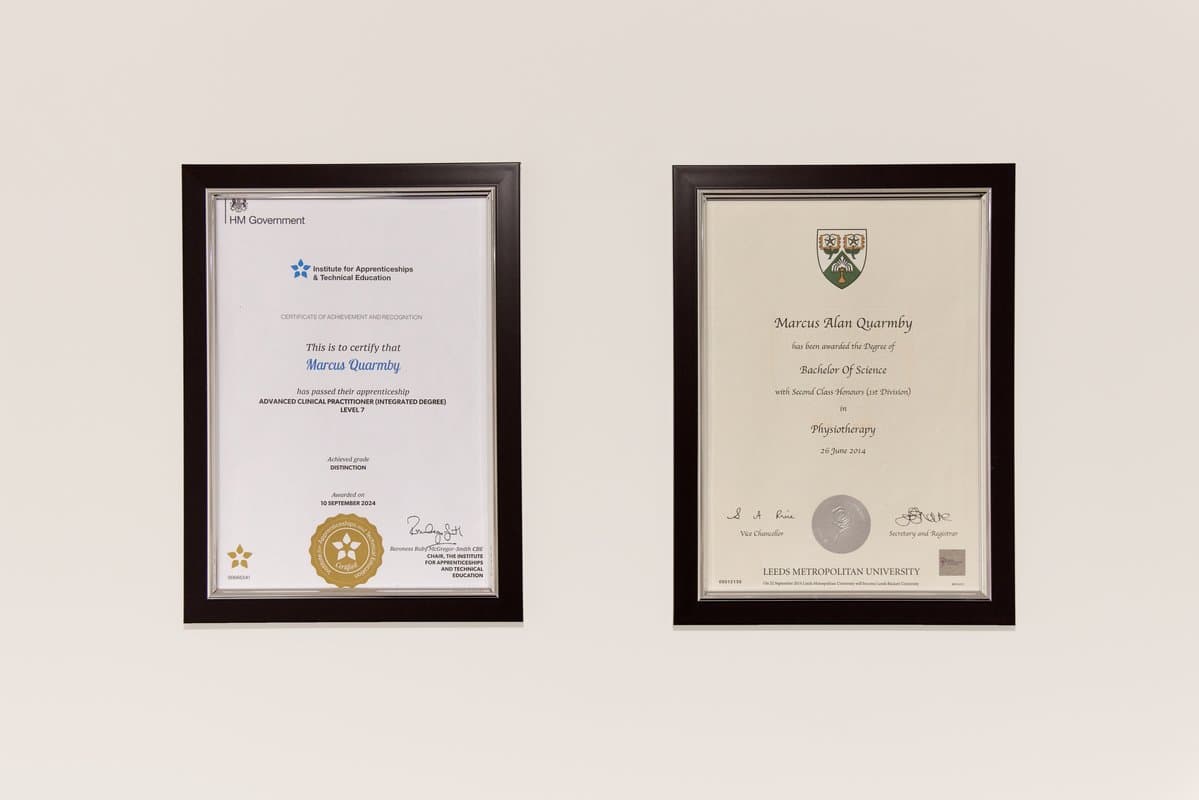
A thorough knee assessment takes time. Marcus will take a full history of the problem: how it started, what aggravates and relieves it, how it behaves through the day, what your activity goals are. He will then carry out a physical examination covering range of motion, ligament integrity, meniscal loading tests, patellar tracking and hip and foot mechanics.
For most knee presentations, clinical assessment is sufficient to reach a working diagnosis and begin treatment. Imaging is not routinely required. Where it is indicated, typically to confirm a suspected ACL tear or significant intra-articular pathology, Marcus will advise on the appropriate investigation and help interpret the findings in the context of your symptoms and goals.
What treatment looks like
Treatment varies by diagnosis, but the principles are consistent. The first priority is understanding the load the knee is currently under and making short-term adjustments to reduce irritation without removing all activity. Complete rest is rarely the answer and often sets recovery back.
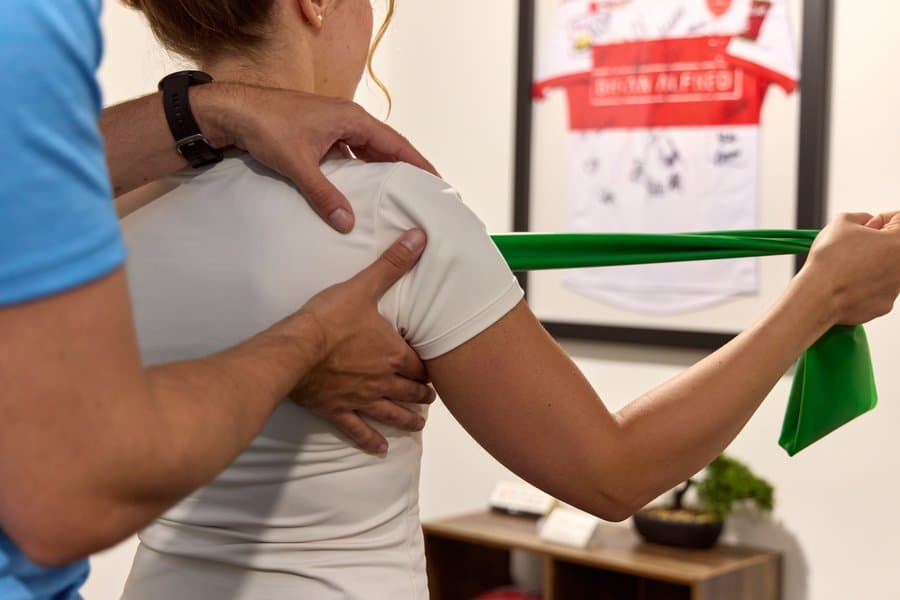
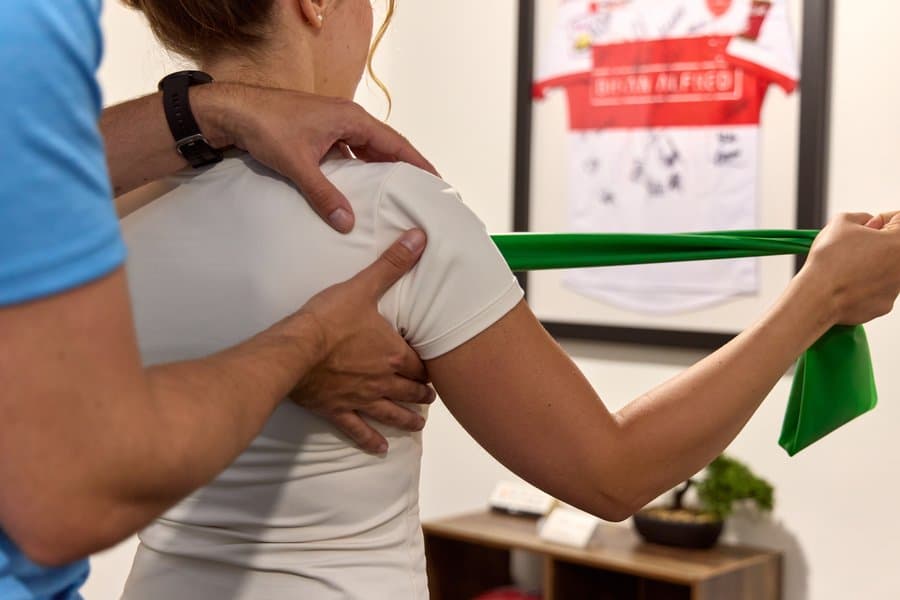
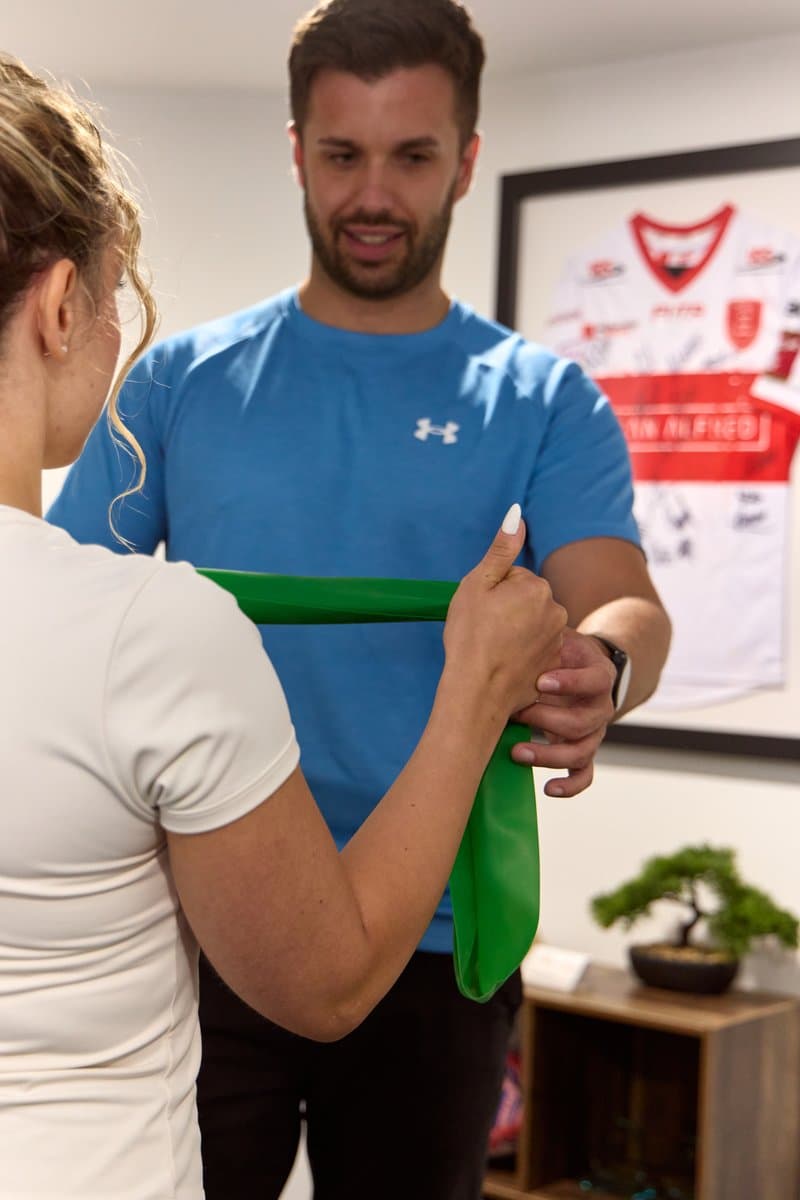
From there, rehabilitation is progressive and specific: strengthening the muscles that support the knee, addressing the movement patterns that contributed to the problem, and gradually reintroducing the activities that matter to you. Manual therapy has a role alongside exercise for some presentations. Return-to-sport programmes, where relevant, are structured around objective criteria rather than a fixed timeline.
The goal is not just to get you out of pain. It is to give you a knee that is more robust than it was before you walked through the door.
Book a knee assessment in Bolton
Joint Venture Physiotherapy sees knee pain patients across Bolton and Greater Manchester. Same-week appointments are available. No GP referral is needed. Call 07586 605462 or book online.