The UK spends billions on back pain every year. A significant portion of that money funds treatments the evidence does not support: prolonged bed rest, unnecessary imaging, injections that produce minimal long-term benefit. A 2018 series in The Lancet described the global state of back pain management as a crisis, driven not by lack of treatment but by the wrong kind of treatment.
The good news: back pain almost always responds to the right approach. The challenge is knowing what that looks like.
Why backs hurt: the part most patients get wrong
Most people arrive at a physiotherapy appointment with a story about their back. A slipped disc. A weak core. A trapped nerve. Something structurally broken that explains the pain. Most of the time, that story is incomplete, and occasionally it's actively unhelpful.
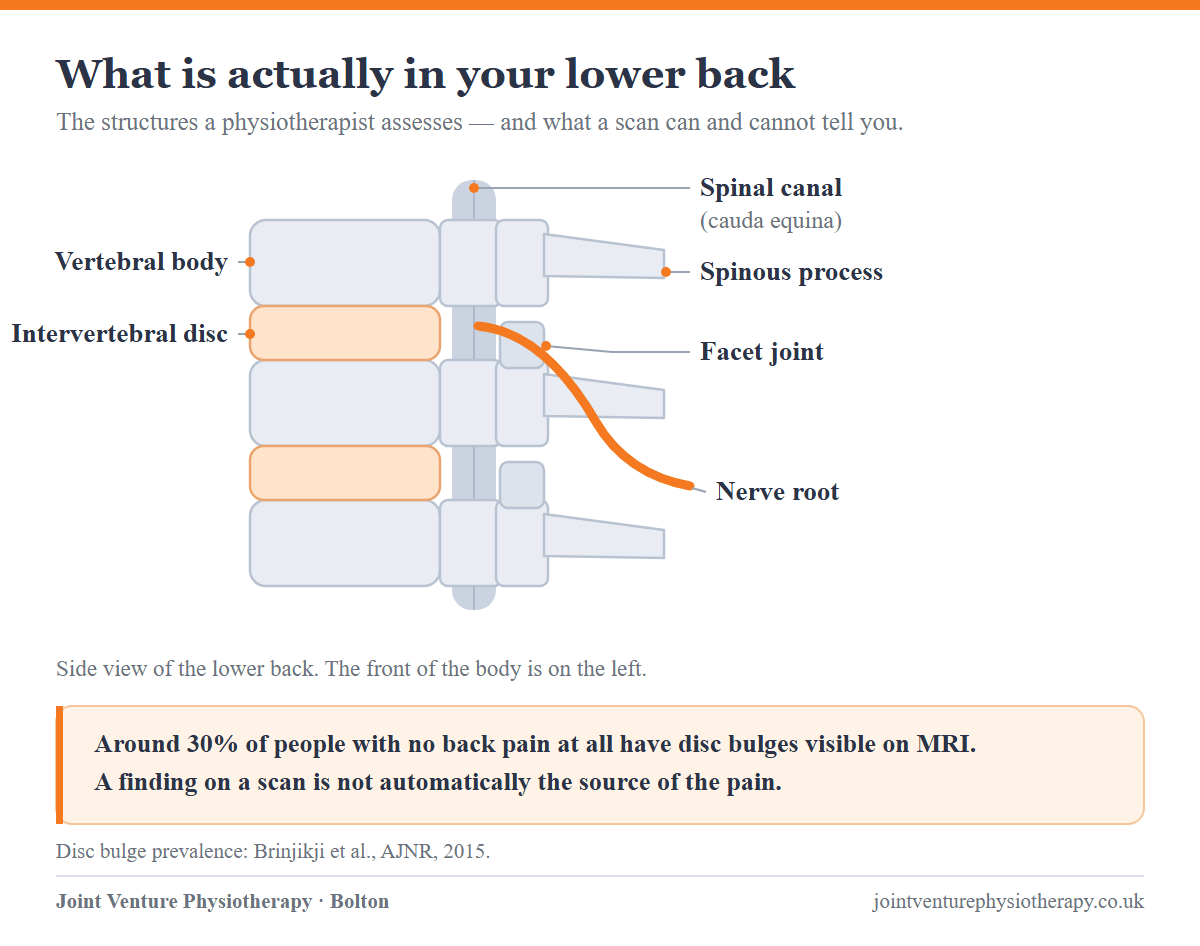
Research consistently shows that the relationship between what a scan finds and what a person feels is weak. Around 30% of people with no back pain at all have disc bulges visible on MRI (Brinjikji et al., 2015, AJNR). Degeneration and disc changes are common in asymptomatic adults over 40. These findings are often normal ageing, not the source of pain.
Pain is more complex than damage. The nervous system's sensitivity, movement patterns, load history, sleep, stress, and psychological factors all play a role, particularly in chronic presentations. Understanding this is not about dismissing pain as "in your head." It's about treating it accurately.
What the evidence recommends
NICE Guideline NG59, the UK's official guidance for low back pain management, is unambiguous: exercise, manual therapy, and education are the front-line treatments. Bed rest is not recommended. Imaging for most acute presentations is not recommended, because it rarely changes management and can anchor patients to structural findings that may not be relevant.
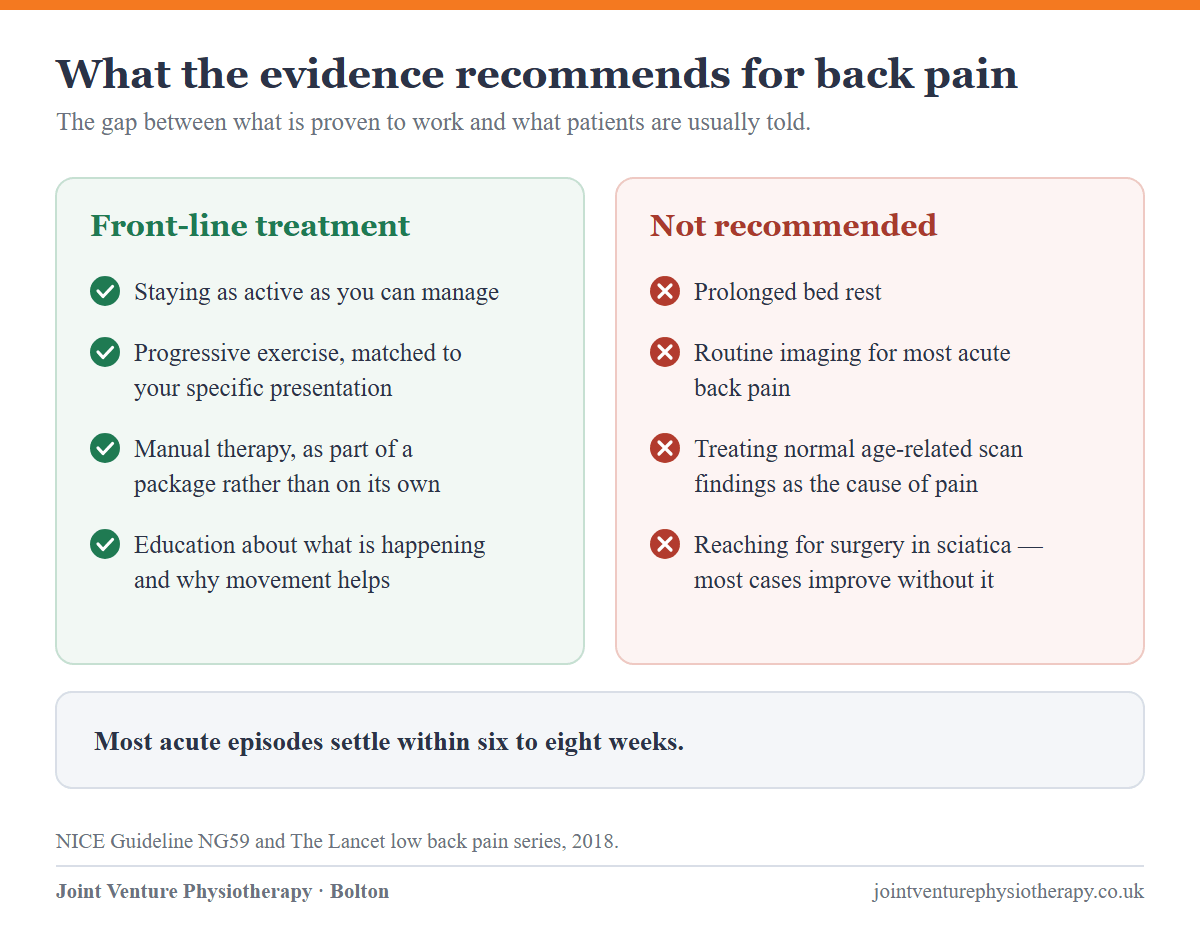
For acute mechanical back pain, most episodes resolve within six to eight weeks. The goal is to remain as active as possible, manage pain enough to move, and avoid the deconditioning that comes with prolonged inactivity.
For disc-related pain and sciatica, physiotherapy is first-line. Specific nerve mobilisation techniques, targeted strengthening, and education about how nerve tissue heals can significantly accelerate recovery. Surgery is rarely needed, and most cases that reach a surgeon's desk improve without it.
For chronic low back pain, the approach requires more than a set of exercises. Pain that has persisted for more than twelve weeks involves the central nervous system as well as local tissue. Effective management addresses movement quality, strength, and pain science education alongside manual therapy and exercise. For some people — where pain has started to affect sleep, mood or confidence in movement — psychologically informed support has a place too, but it is one option among several rather than a standard part of care.
What physiotherapy actually involves
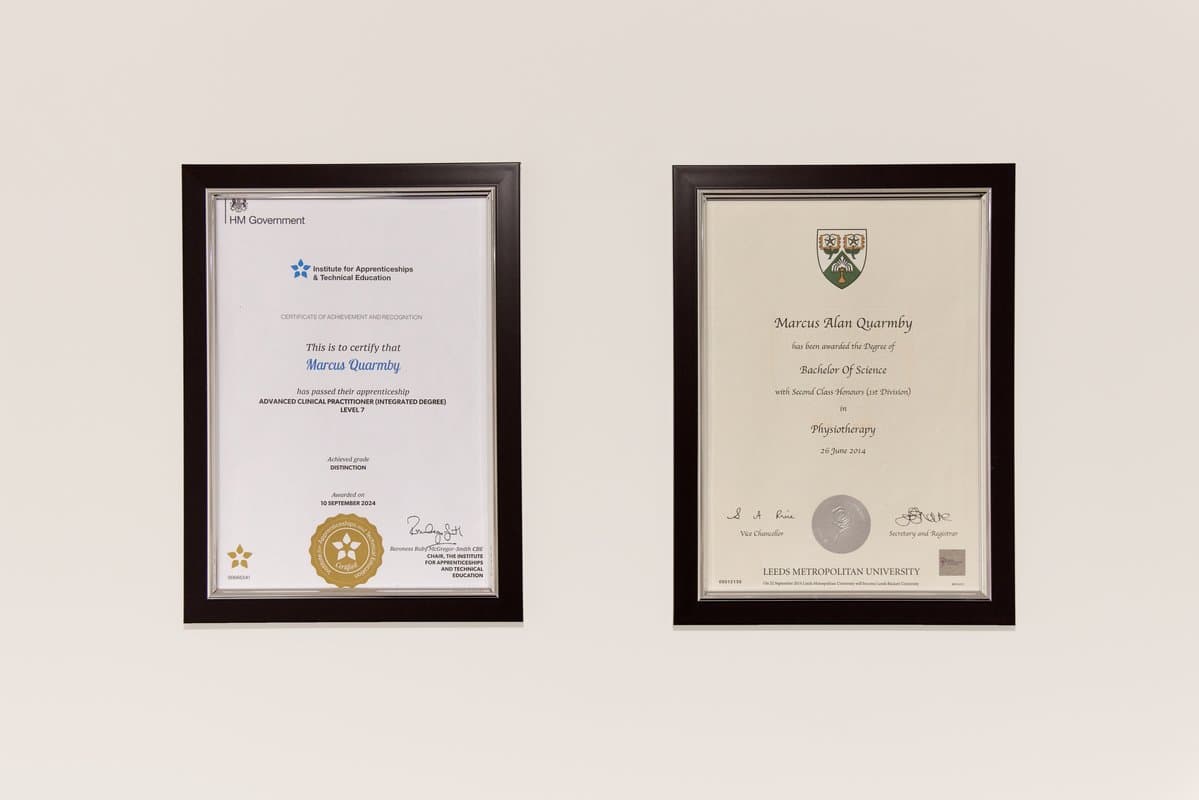
A thorough assessment comes first. Marcus will take a detailed history of your back pain, identifying when it started, what aggravates and eases it, your activity levels, occupation, and any associated symptoms. A physical examination follows: movement analysis, specific orthopaedic and neurological testing, and hands-on assessment of the spine and surrounding structures.
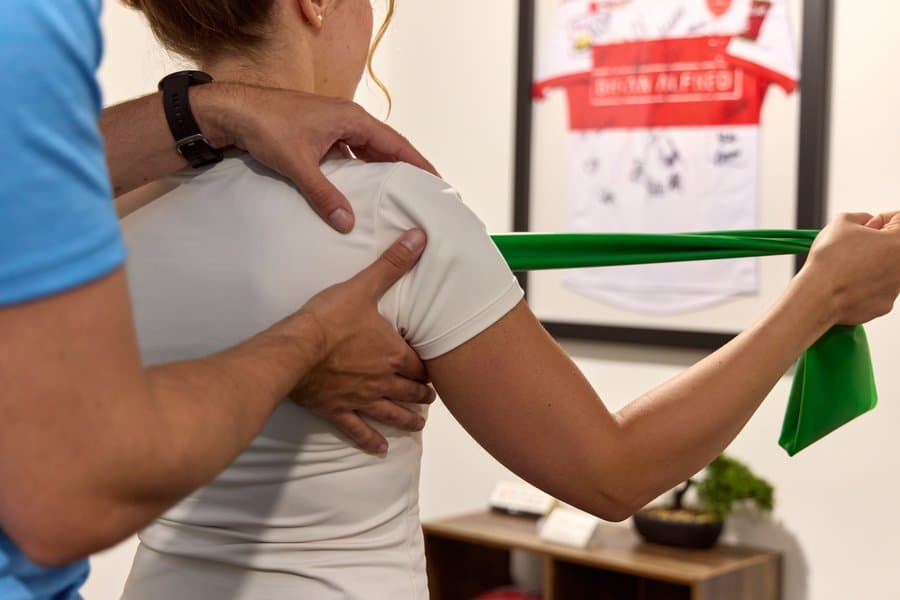
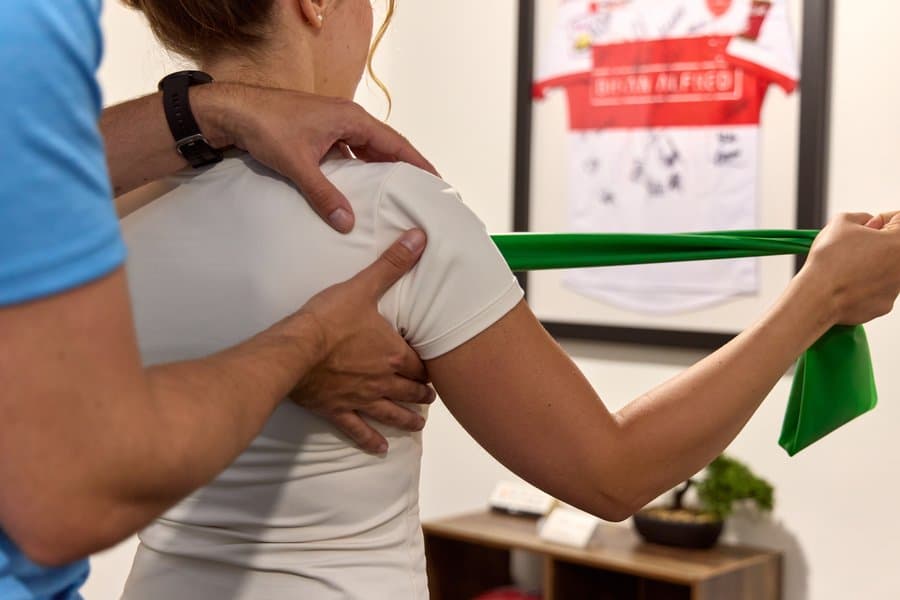
The goal is not a generic diagnosis, but a specific understanding of what is driving your pain and what will resolve it. Treatment typically combines manual therapy to restore movement and reduce pain, a progressive exercise programme targeted to your specific presentation, education about what is happening and why movement helps, and acupuncture where indicated for pain management.
By the end of your first appointment, you will have a clear diagnosis, an explanation of what is causing your pain, and a specific treatment plan with realistic timelines. Most acute presentations improve significantly within four to six sessions. Chronic or nerve-related conditions typically need longer, and Marcus will be direct about what to expect.
Red flags: when to see a doctor first
The vast majority of back pain presentations are appropriate for direct physiotherapy. There are a small number of symptoms that warrant medical assessment first, including loss of bladder or bowel control, numbness in the groin or inner thighs, unexplained significant weight loss, or pain that is constant, severe and worsening regardless of position. If any of these apply, see a doctor before booking physiotherapy.
Same-week appointments in Bolton
Joint Venture Physiotherapy offers direct-access back pain assessments with no GP referral required. Evening and Saturday appointments are available. Most patients with acute back pain are seen within three to five days of booking.