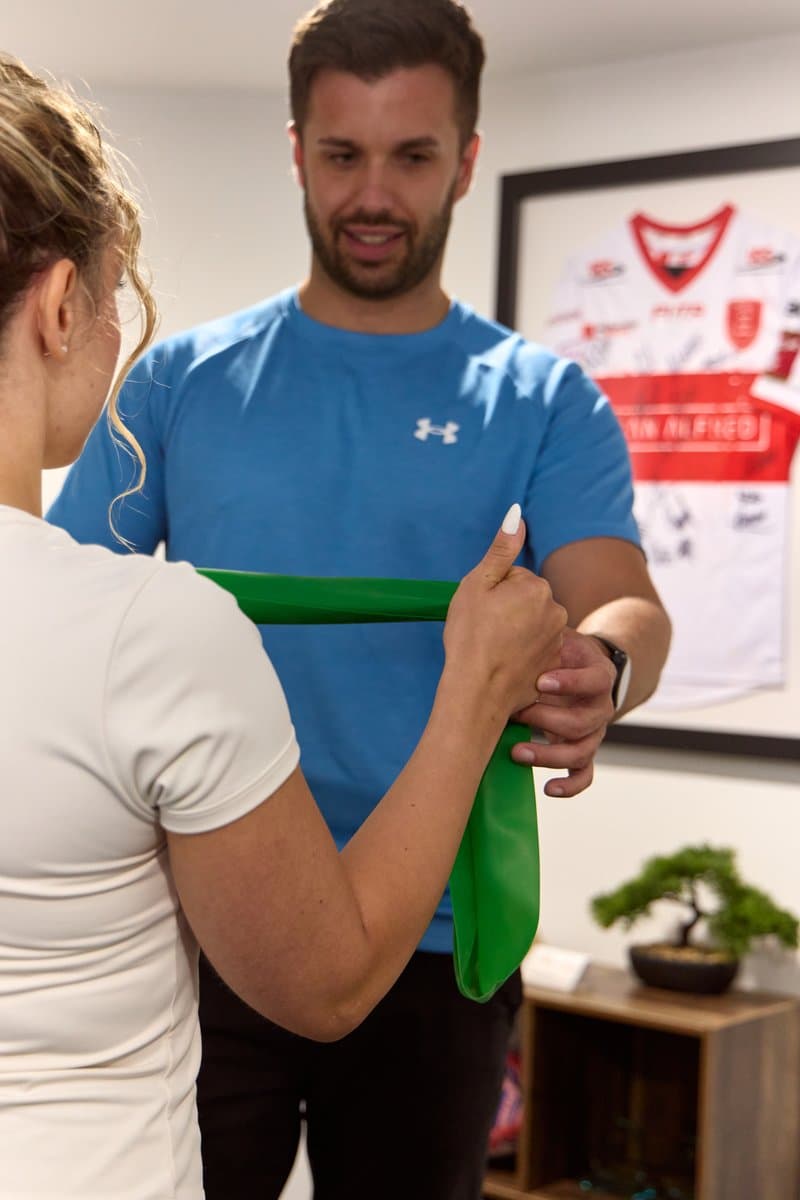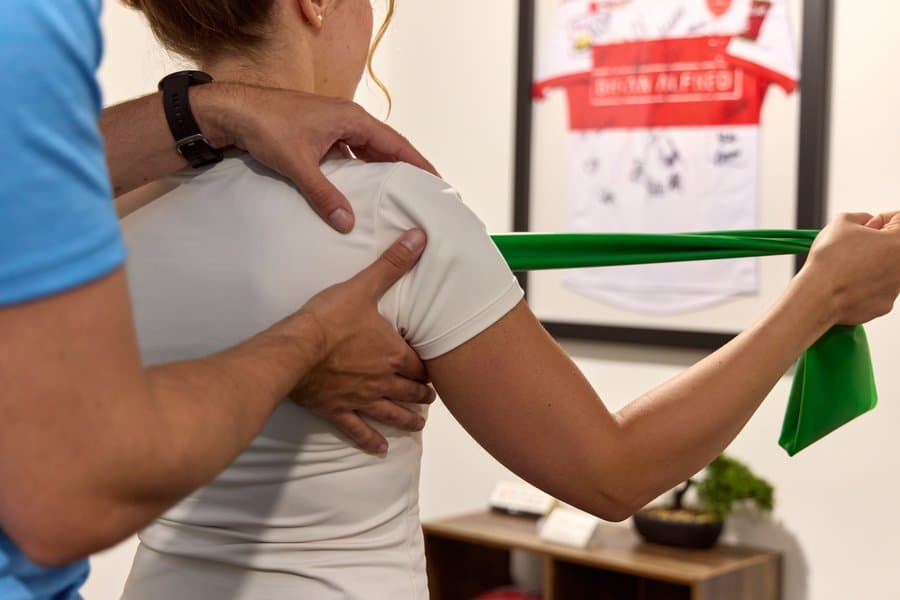
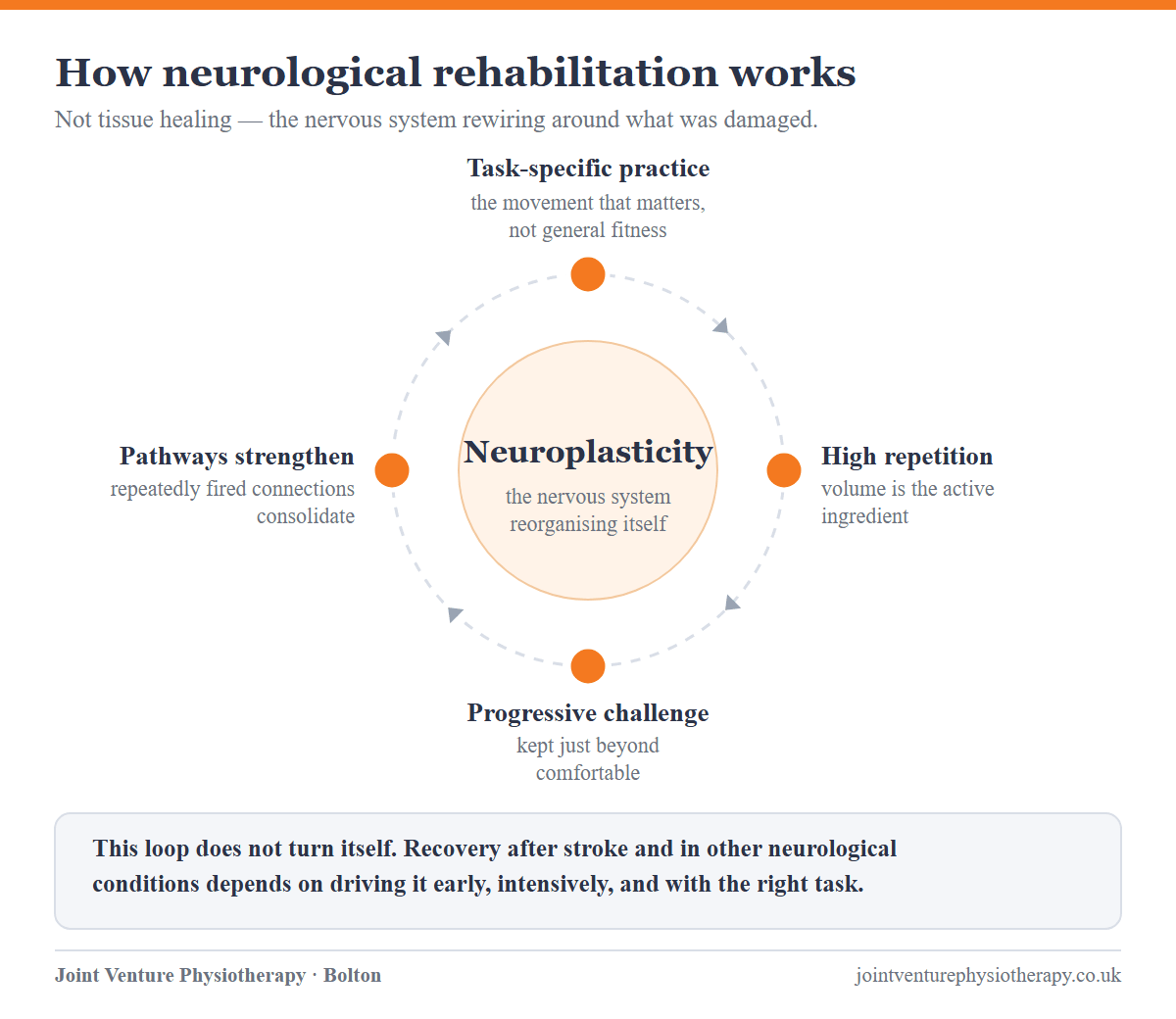
The brain can physically rewire itself after injury. This is not a metaphor or a motivational claim. It is the clinical mechanism, called neuroplasticity, that underpins neurological physiotherapy and explains why intensive, targeted rehabilitation consistently produces better outcomes than rest following neurological injury or disease.
When neurons fire repeatedly through new pathways, those pathways strengthen. The brain and spinal cord can form new connections to compensate for damaged ones. The extent to which this happens depends on several factors, but among the most important is whether the person receives the right rehabilitation, early enough, and at sufficient intensity.
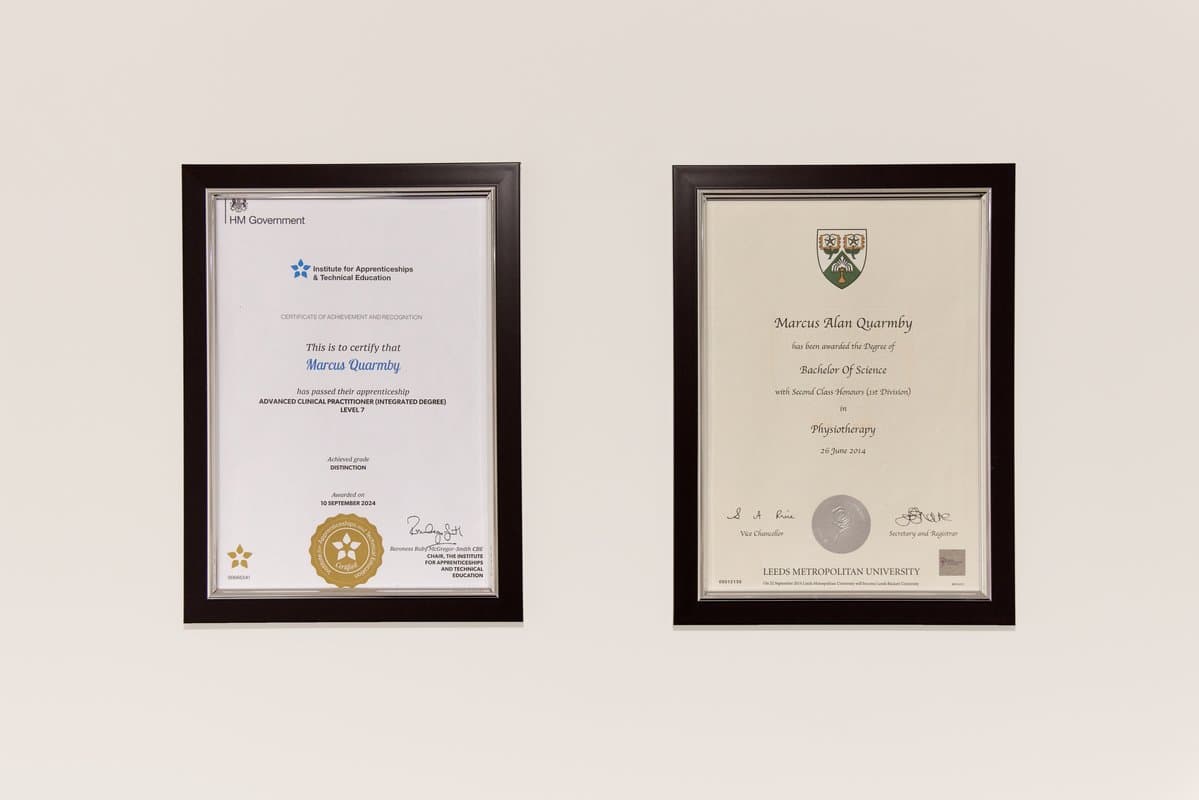
Neurological physiotherapy is built around this mechanism. It requires a different level of training, different assessment approaches, and different treatment techniques from standard musculoskeletal physiotherapy. Not all physiotherapists have this background. Marcus does.
How it differs from standard physiotherapy
Musculoskeletal physiotherapy focuses on bones, joints, muscles and soft tissues. The principles of loading, movement quality and exercise progression apply, but the underlying biology is the same in every patient: injured tissue heals, and rehabilitation supports that process.
Neurological physiotherapy operates differently. The conditions it treats affect the nervous system itself: the brain, spinal cord, or peripheral nerves. Recovery depends not on tissue healing in the conventional sense, but on neuroplasticity, the nervous system's capacity to adapt and reorganise. The rehabilitation techniques are designed to drive that process: task-specific practice, high repetition, progressive challenge, and approaches that target specific neurological deficits rather than general fitness.
Conditions neurological physiotherapy treats
Stroke
Physiotherapy is a core component of stroke recovery. After a stroke, the brain has an extraordinary capacity to reorganise, but that reorganisation is not passive. It requires practice. Research shows consistently that early, intensive, task-specific rehabilitation produces better functional outcomes than the same treatment delivered later or at lower intensity. Marcus can provide both in-clinic and remote stroke rehabilitation.
Multiple sclerosis
MS produces a wide range of symptoms including fatigue, weakness, balance problems, spasticity and cognitive difficulties. The course of the disease varies considerably between individuals. Physiotherapy for MS focuses on maintaining function, managing fatigue through pacing and energy conservation, improving balance and reducing falls risk, and addressing specific movement problems as they arise. Exercise has a well-established evidence base in MS for improving strength, walking, and quality of life.
Parkinson's disease
LSVT BIG, a physiotherapy programme developed specifically for Parkinson's disease, has strong trial evidence for improving movement amplitude, walking speed and quality of life. It involves intensive, high-amplitude movement training that directly targets the bradykinesia (slowness and small-amplitude movement) characteristic of Parkinson's. Beyond LSVT BIG, physiotherapy for Parkinson's addresses gait, falls prevention, and maintaining independence as the condition progresses.
Functional neurological disorder (FND)
FND produces genuine neurological symptoms, including weakness, tremor, gait disturbance, and non-epileptic attacks, without a structural lesion. The mechanism is physiological but not structural: the nervous system is producing symptoms that cannot be explained by damage alone. Physiotherapy is a primary treatment for FND, but it requires a specific, collaborative approach that differs from both MSK physiotherapy and standard neurological rehabilitation. Marcus has training in FND management.
Cerebral palsy
Cerebral palsy affects movement, posture and muscle tone, and its presentation varies widely from person to person. Physiotherapy plays a central, lifelong role: maintaining and improving mobility, managing spasticity and contracture risk, supporting strength and function, and helping people stay active and independent. Adults with cerebral palsy in particular benefit from ongoing physiotherapy to manage the secondary musculoskeletal changes that develop over time.
Remote appointments
All neurological physiotherapy at Joint Venture Physiotherapy is available via video consultation as well as in-clinic. For patients with significant fatigue, mobility difficulties or other barriers to travel, remote appointments are a genuine clinical option. Neurological assessment and much of the exercise and movement rehabilitation can be conducted effectively via video.
How to book
No GP referral is needed for a private neurological physiotherapy appointment. It is helpful, though not required, to bring any relevant clinic letters or reports from neurology to your first appointment.
If you are unsure whether your condition or symptoms are appropriate for neurological physiotherapy, contact us before booking. Marcus will give you a direct answer.